Autumn Budget 2026 for Online Sellers: What Changed
October 28, 2026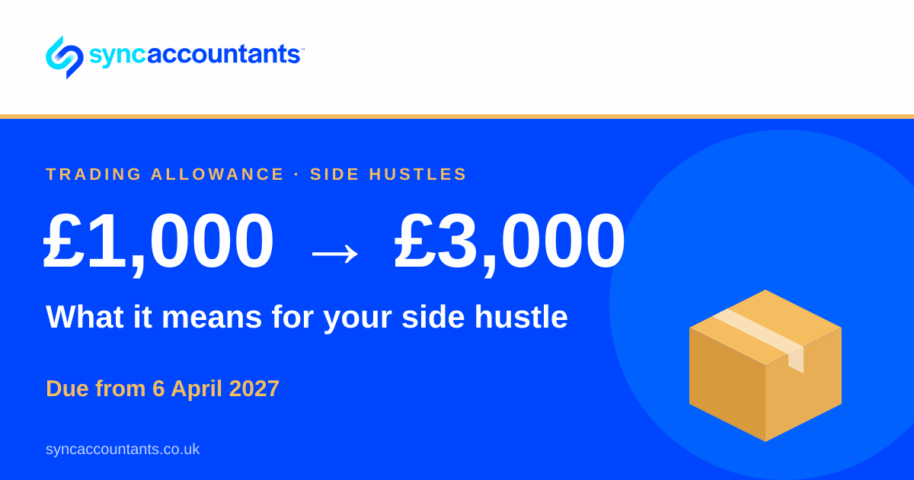
The £3,000 trading allowance was announced at the Autumn Budget 2026 and is due to replace the £1,000 allowance from 6 April 2027. It covers gross sales before costs, so trading income up to £3,000 is due to be tax-free from 2027 to 2028 once legislated. Until then the £1,000 limit applies, and HMRC wants to hear about income over £1,000.
If you sell on Vinted, eBay, Etsy or Depop alongside a job, this change is aimed squarely at you. In this article we explain what the new allowance covers, whether you still need to tell HMRC about this year’s sales, and when claiming your actual costs instead beats the flat allowance. We provide accounting for online sellers every day, so we will keep it practical.
- What the £3,000 trading allowance changes
- Clearing out your wardrobe usually is not a side hustle
- Do you still need to tell HMRC?
- Allowance or actual expenses? Four worked examples
- What to do now
- £3,000 trading allowance FAQs
What the £3,000 trading allowance changes
At the Autumn Budget on 28 October 2026, the government announced that the trading allowance will rise from £1,000 to £3,000 from 6 April 2027, for the 2027 to 2028 tax year onwards. It is not law yet: the change will be legislated in the Finance Bill 2026-27, so treat both the start date and the detail as subject to the Bill.
The allowance covers trading income and miscellaneous income, for example selling goods you make or buy to resell, or small services. It is measured on gross income, your total sales before any costs or fees, not on profit. That matters: £2,500 of sales with £1,000 of postage and stock still counts as £2,500.
You get one allowance per person per tax year, not one per platform or per side hustle. Your Vinted, eBay, Etsy, Depop, car boot and cash sales all count together in the same pot. The government estimates around 400,000 people will see a lower tax bill, by £380 on average, and around 100,000 will no longer need to report their trading income.
Clearing out your wardrobe usually is not a side hustle
Before you worry about allowances, check whether you are trading at all. Selling your own unwanted belongings is not usually trading. HMRC puts it plainly: “You’re unlikely to pay tax if you sell personal items from your home, like contents of a loft or garage.” And on the other side: “If you buy or make goods to sell at a profit, you’re likely to be trading.”
HMRC judges this with tests called the badges of trade, for example how often you sell, whether you bought items in order to resell them, and whether you repair or improve them to sell at a profit. Selling your own unwanted dresses is unlikely to be trading. Buying vintage jeans at car boot sales to resell is likely to be.
One thing that spooks sellers is platform reporting. Platforms in scope of the rules, such as Vinted, eBay and Etsy, report seller details and earnings to HMRC every year, by 31 January for the previous calendar year, with the first reports covering 2024. Platforms do not need to report sellers with fewer than 30 sales of goods and 2,000 euros (roughly £1,700) or less in a year. If you are wondering whether HMRC can see your Vinted sales, the answer is yes once you pass that threshold, but HMRC itself says a platform reporting your details does not automatically mean you owe tax. HMRC guidance on selling through digital platforms sets out the rules.
Do you still need to tell HMRC?
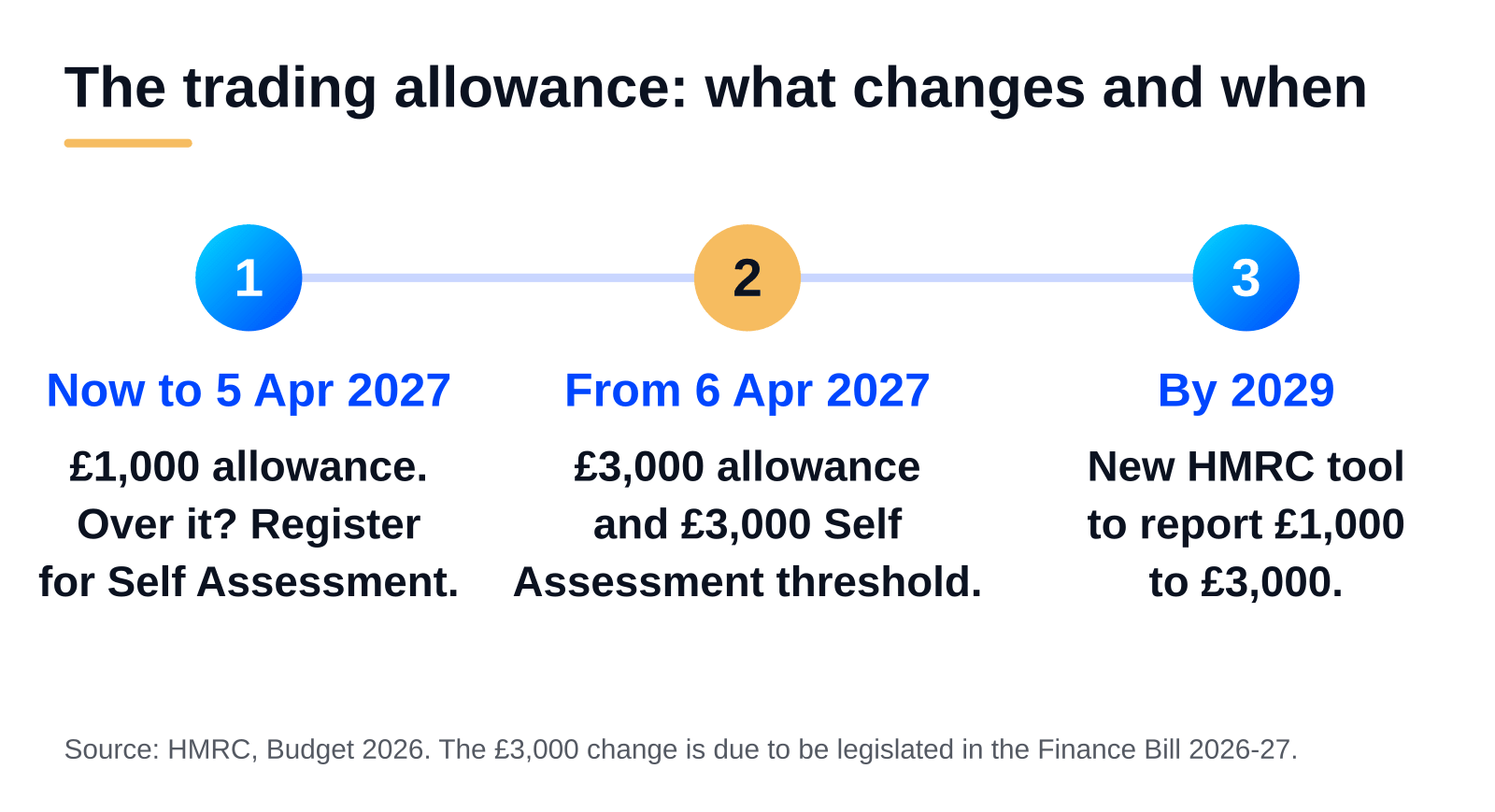
Here is where two official statements do not quite line up yet. HMRC’s policy paper says the government is also raising the Income Tax Self Assessment reporting threshold to £3,000 from 6 April 2027, which will reduce the number of people who need to submit a tax return for this income. But HMRC’s own side-hustle guidance, updated after the Budget, says that if you earn over £1,000 from side hustles you will still need to tell HMRC. It mentions a new online reporting tool that is on the way by 2029: once that is live, people earning between £1,000 and £3,000 will be able to use it instead of a Self Assessment return. Until then, you tell HMRC through Self Assessment.
So the honest position is this: the £3,000 reporting threshold is announced, but HMRC has not yet published how the £1,000 to £3,000 band will actually be reported in the meantime. Our advice is to assume you still need to tell HMRC if your side-hustle income is over £1,000, and keep an eye out for the detail.
The other thing to be very clear about: this change does not help with the income you are earning right now. Until 5 April 2027 the old £1,000 allowance still applies. For the 2026 to 2027 tax year, 6 April 2026 to 5 April 2027, if your gross trading income is over £1,000 you must register for Self Assessment by 5 October 2027, then file and pay by 31 January 2028.
Not sure where your side hustle stands? Our FCCA-chartered team sorts out Self Assessment for UK online sellers every day. Book a free 30-minute call and we’ll tell you whether you need to register and which option saves you more.
Allowance or actual expenses? Four worked examples
If your gross trading income is over the allowance, you can choose to deduct the flat allowance instead of your actual expenses. You cannot claim both, but you can pick whichever gives the lower taxable profit, and the better choice can change from year to year. HMRC guidance on how the trading allowance works sets out the rules. Here is how it plays out for four typical sellers, including what it means for tax on eBay sales.
| Seller | Sales | Costs | Taxable using actual costs | Taxable using £3,000 allowance | Better choice |
|---|---|---|---|---|---|
| Priya (Vinted, own clothes) | £2,400 | n/a | Unlikely to be trading | Unlikely to be trading | Probably nothing to report |
| Sam (eBay and Depop, reseller) | £2,700 | £1,100 | £1,600 | £0 | Allowance (under £3,000), may still need to tell HMRC |
| Jo (Etsy, handmade candles) | £9,000 | £2,200 | £6,800 | £6,000 | Allowance |
| Mo (eBay, trainers) | £20,000 | £12,000 | £8,000 | £17,000 | Actual costs |
Priya clears out her wardrobe on Vinted and makes £2,400. They are her own used clothes, sold for less than she paid, so she is unlikely to be trading and the trading allowance probably never comes into it. There is likely nothing to pay.
Sam buys vintage denim at car boot sales and resells it on eBay and Depop, with sales of £2,700 and costs of £1,100. In 2027 to 2028 his gross income is under £3,000, so the whole lot is covered and there is no tax to pay. He may still need to tell HMRC, because HMRC has not yet confirmed how income between £1,000 and £3,000 will be reported. With the same figures in 2026 to 2027 he is over £1,000, so he must report. His options then are the £1,000 allowance, leaving £1,700 taxable, or actual costs, leaving £1,600. Actual costs win that year.
Jo makes candles and sells them on Etsy, with sales of £9,000 and costs of £2,200. Her actual profit is £6,800, but using the £3,000 allowance instead gives a taxable profit of £6,000, which is £800 lower. If her job already uses up her personal allowance, that is £160 less income tax at the 20% basic rate, provided it all falls within the basic-rate band. Under the old £1,000 allowance she would have been taxed on £8,000 if she used the allowance, so actual costs were the better choice. The rise flips her decision.
Mo resells trainers on eBay, with sales of £20,000 and costs of £12,000. His actual profit is £8,000, but using the allowance would leave £17,000 taxable, so he should keep claiming actual costs. The rise changes nothing for him. One more limit: the allowance cannot be used for income from a company you or a connected person own or control, from a partnership you are in, or from your employer or your spouse’s or civil partner’s employer.
What to do now
Here is the short version of what to do between now and April 2027.
- Add up all your platforms. Combine your Vinted, eBay, Etsy, Depop, car boot and cash sales, because the allowance is one per person per tax year, not per platform.
- Separate personal items from stock. Your own unwanted belongings are not usually trading, but anything you bought or made to sell at a profit counts towards your gross trading income.
- Keep records of sales and costs. Your platform reports do much of the work for you, but keep your own notes on stock costs, postage and fees so you can compare the allowance against actual expenses.
- Deal with 2026 to 2027 first. If your gross trading income this tax year is over £1,000, register for Self Assessment by 5 October 2027 and file and pay by 31 January 2028, because the new allowance does not start until 6 April 2027.
- Compare the allowance against actual costs each year. From 2027 to 2028 the better choice depends on your margins, and the answer can flip from one year to the next, so run the numbers every time.
£3,000 trading allowance FAQs
When does the £3,000 trading allowance start?
It is due to start on 6 April 2027, for the 2027 to 2028 tax year onwards, having been announced at the Autumn Budget on 28 October 2026. It is not law yet and will be legislated in the Finance Bill 2026-27. Until 5 April 2027 the old £1,000 allowance still applies.
Is the £3,000 allowance per platform?
No. You get one allowance per person per tax year, not one per platform or per side hustle. Your Vinted, eBay, Etsy, Depop, car boot and cash sales all count together in the same pot, and the allowance is measured on your total gross sales before costs.
Do I pay tax on selling my old clothes on Vinted?
Usually not. Selling your own unwanted belongings is not normally classed as trading, so the trading allowance usually does not come into it. HMRC says you are unlikely to pay tax if you sell personal items from your home. If you buy or make goods to sell at a profit, you are likely to be trading, and those sales do count.
Will Vinted or eBay tell HMRC about my sales?
Yes, if you pass the reporting threshold. Digital platforms report seller details and earnings to HMRC every year by 31 January for the previous calendar year. Platforms do not need to report sellers with fewer than 30 sales of goods and 2,000 euros (roughly £1,700) or less in a year. HMRC says a platform reporting your details does not automatically mean you owe tax.
Can I claim the trading allowance and my expenses?
No, you cannot claim both. If your gross trading income is over the allowance, you choose between deducting the flat £3,000 and claiming your actual expenses, picking whichever gives the lower taxable profit. The better choice can change from year to year, so it is worth comparing each time.
Talk to a UK ecommerce accountant
If you’d like a hand working out where your side hustle stands, our FCCA-chartered team works with over 700 UK ecommerce sellers across Amazon, eBay, Etsy, Vinted and TikTok Shop. Tell us what you sell and we’ll show you exactly what you need to do. Book a free consultation or request a tailored quote.