Marketplace VAT Traps: Read This Before HMRC Does
March 13, 2026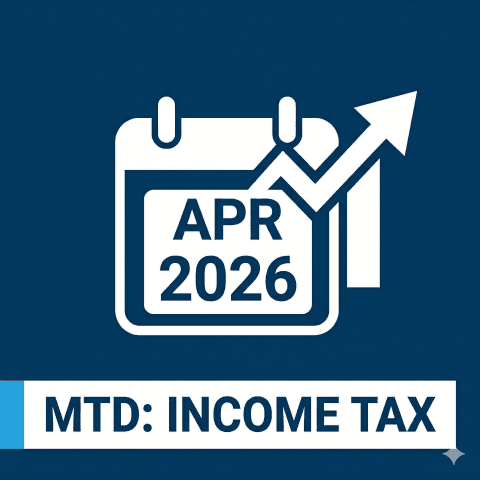
MTD for Income Tax officially begins on 6 April 2026, marking one of the most significant overhauls to the UK’s tax system in decades. If you are a sole trader or a landlord, the days of handing over a shoebox of receipts once a year for your self-assessment tax return are rapidly coming to an end. HM Revenue & Customs (HMRC) is modernising tax reporting, requiring businesses to keep digital records and submit quarterly updates via compatible software.
Because the initial deadline is now upon us, understanding how the staggered thresholds apply to your income is critical. Here is everything you need to know about the phased rollout and how to prepare your business.
What is MTD for Income Tax?
Making Tax Digital (MTD) is a government initiative designed to make tax administration more effective, more efficient, and easier for taxpayers to get their tax right. While MTD for VAT has been in place for several years, the expansion into income tax changes how unincorporated businesses and landlords report their earnings.
Instead of filing a single self-assessment tax return by 31 January each year, those affected by MTD for Income Tax must:
- Maintain their financial records digitally using HMRC-recognised accounting software.
- Submit quarterly updates of their income and expenses to HMRC.
- Provide an End of Period Statement (EOPS) and a Final Declaration to calculate their final tax liability.
This shift means moving away from manual spreadsheets and paper records toward streamlined, cloud-based accounting solutions.
The Phased Timeline: 2026, 2027, and 2028
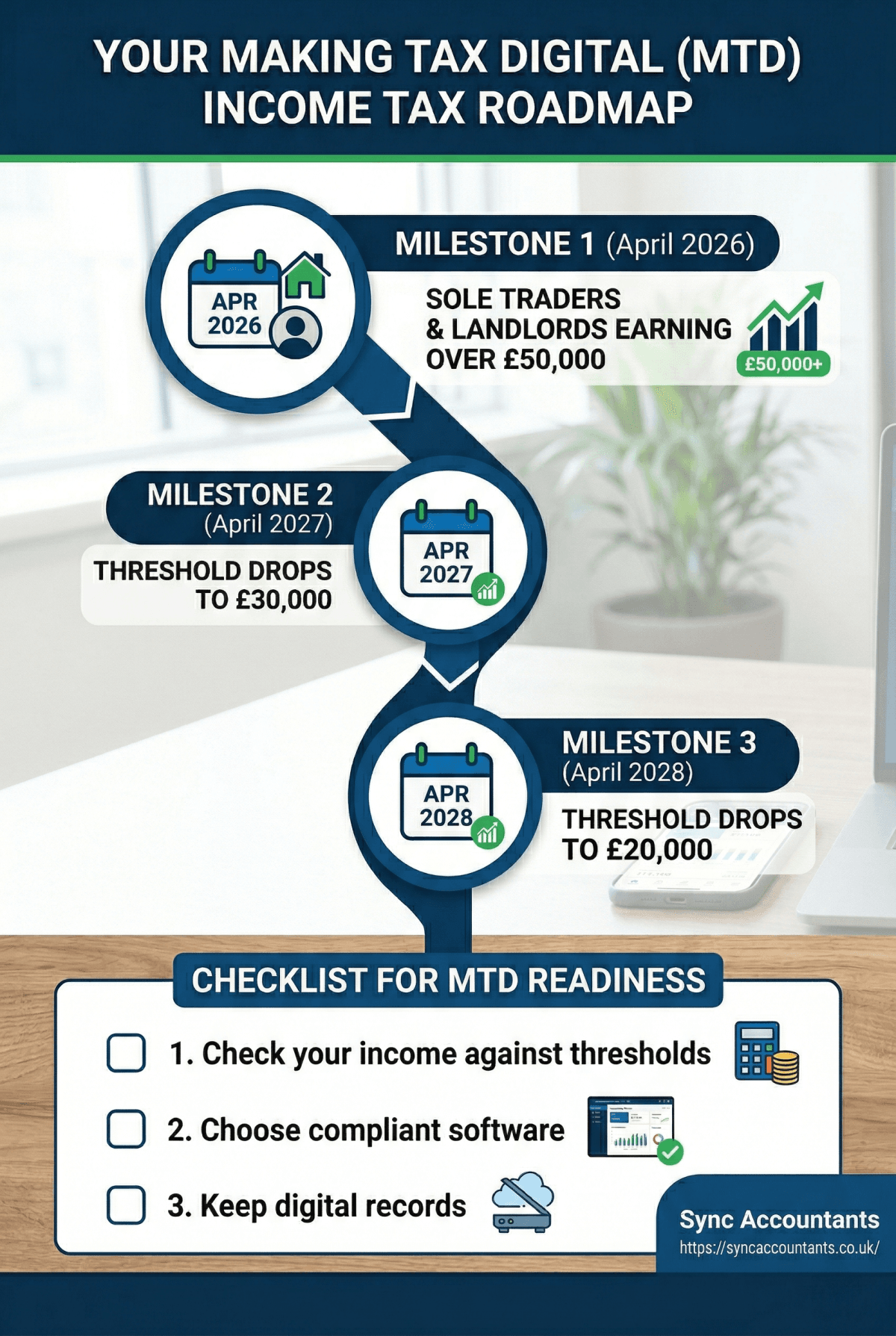
To ease the transition, HMRC is rolling out the mandate in stages, based on “qualifying income” (your combined gross income from self-employment and property before any expenses are deducted).
- 6 April 2026: The rules become mandatory for sole traders and landlords with a qualifying income of over £50,000. If your income exceeded this threshold in the 2024/25 tax year, you must comply immediately.
- 6 April 2027: The threshold drops. Sole traders and landlords with a qualifying income of over £30,000 will be mandated to join the digital system.
- 6 April 2028: The threshold drops again, expanding the mandate to include those with a qualifying income of over £20,000.
The government has indicated that it is still reviewing how to bring businesses earning under £20,000 into the fold, so further announcements may follow in the coming years. Furthermore, general partnerships are currently exempt, though they will be mandated at a future, yet-to-be-confirmed date.
Are You Affected? Calculating Your Qualifying Income
It is vital to look at your gross income, not your net profit. If you run a self-employed graphic design business making £35,000 a year before expenses, and you also receive £20,000 in rental income from a buy-to-let property, your total qualifying income is £55,000. Under the current rules, this combined total puts you over the £50,000 threshold, meaning you must comply with the new rules from April 2026.
Keep in mind that employment income (PAYE), dividend income, and bank interest do not count towards your qualifying income for these thresholds.
What You Need to Do Right Now
If your earnings place you in the April 2026 cohort, immediate action is required. If you are in the 2027 or 2028 brackets, acting early will save you from future compliance headaches.
- Assess Your Income: Review your 2024/25 tax return to confirm your gross self-employment and property income.
- Adopt Cloud Accounting Software: You cannot use paper ledgers or basic spreadsheets to file quarterly updates directly to HMRC. You must use bridging software or, ideally, comprehensive HMRC-approved cloud accounting software.
- Establish Digital Habits: Start recording your transactions digitally as they happen. Waiting until the end of the quarter to digitise hundreds of paper receipts defeats the time-saving benefits of the software.
- Consult Your Accountant: A professional advisor can help you migrate your data, set up your software properly, and ensure you never miss a quarterly deadline.
Conclusion
Transitioning to MTD for Income Tax might feel daunting, but it presents a fantastic opportunity to gain better visibility over your finances. By maintaining real-time digital records, you will have a much clearer picture of your cash flow and impending tax liabilities throughout the year, rather than facing a surprise tax bill in January. Don’t leave your compliance to the last minute—embrace the digital shift today and secure the financial foundation of your business for 2026 and beyond.