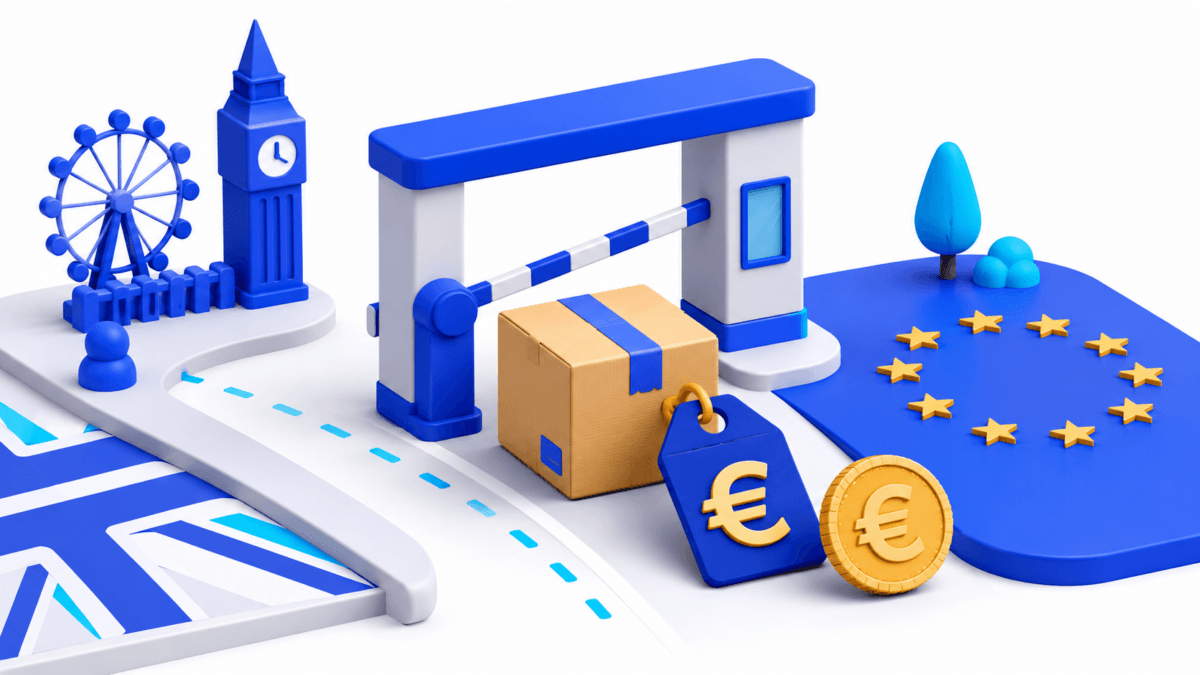
MTD for Ecommerce Sole Traders: What UK Sellers Must Do Now
May 7, 2026
Does HMRC Know About My Crypto? A Guide for UK Sellers Paying Suppliers in Crypto
May 21, 2026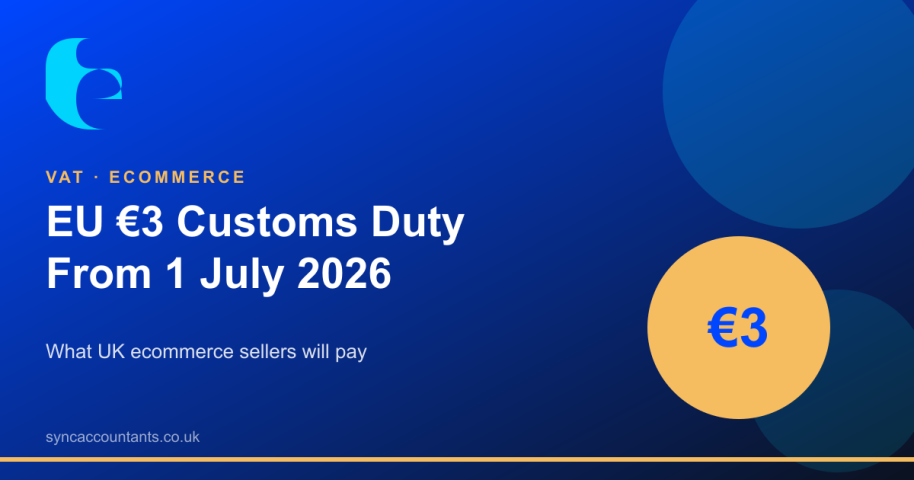
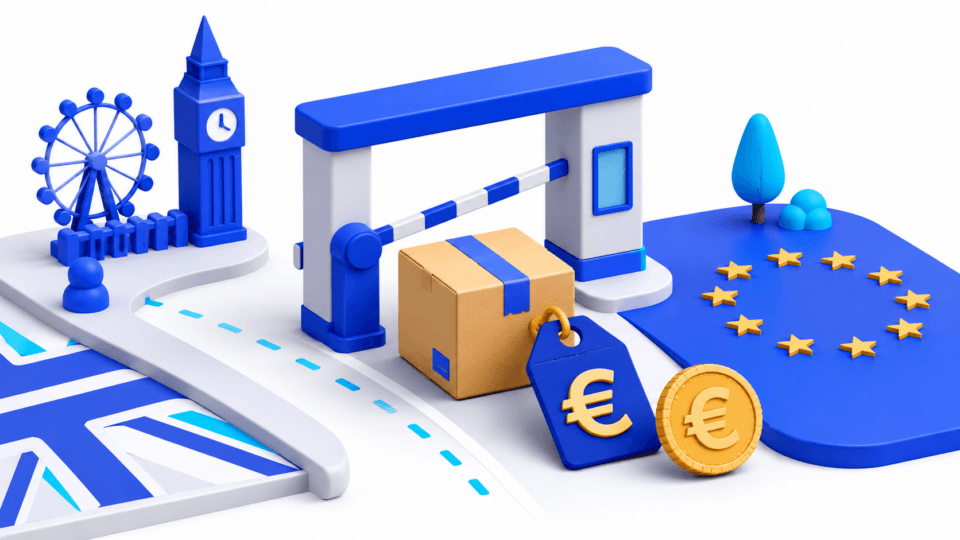
The EU €3 customs duty starts on 1 July 2026 and replaces the old €150 duty-free threshold on small parcels entering the EU. UK ecommerce sellers shipping low-value goods to EU customers will pay a fixed €3 per tariff heading on every parcel below €150, on top of existing IOSS VAT.
What’s in this guide
- What the EU €3 customs duty actually is
- When the EU €3 customs duty starts and when it might end
- How the €3 is calculated on a real parcel
- What UK ecommerce sellers should do before 1 July 2026
- The November 2026 handling fee on top of the €3
- FAQs
The EU €3 customs duty is the biggest change to cross-border ecommerce since Brexit, and it lands on 1 July 2026. If you sell from the UK to customers in France, Germany, Spain, Italy, or anywhere else in the EU, this rule will hit roughly 93% of your low-value parcels. Here’s exactly what the change is, what it costs, and what you should do before July.
What the EU €3 customs duty actually is
For years, parcels valued under €150 entered the EU duty-free. That changes on 1 July 2026. The EU Council formally approved the new rules on 11 February 2026, scrapping the €150 customs duty exemption and replacing it with a flat €3 charge per item category in any small parcel entering the bloc.
The €3 is not a “per parcel” fee. It is applied per tariff sub-heading, which means a parcel containing three different product types (a t-shirt, a mug, and a phone case, for example) gets charged €9 in customs duty, not €3.
This sits on top of the import VAT you or your customer already pay through the EU’s Import One-Stop Shop (IOSS). VAT is unchanged. The EU €3 customs duty is new, and it stacks.
When the EU €3 customs duty starts and when it might end
The duty applies from 1 July 2026 as an interim measure, running until at least 1 July 2028. The EU describes it as a transitional fix while it builds the new EU Customs Data Hub, expected to come online around 2028. The interim period may be extended.
A separate ecommerce handling fee, expected to land around November 2026 at roughly €2 per parcel, is also moving through the EU legislative process. Some member states (France, Italy, Romania) already charge their own national fees on top.
In short: by the end of 2026, a single UK-origin parcel to an EU customer could be carrying €3 customs duty, around €2 handling fee, plus IOSS VAT at the destination country’s rate.
How the €3 is calculated on a real parcel
A customer in Paris orders three items from a UK Shopify store: a £15 cotton t-shirt, a £8 ceramic mug, and a £12 phone case. The total parcel value is £35, well under the €150 threshold.
Before 1 July 2026, that parcel paid nothing in customs duty. From 1 July, each of those three items sits under a different tariff heading (textiles, ceramics, plastic accessories), so the parcel attracts €3 × 3 = €9 in EU customs duty. Add roughly 20% French IOSS VAT on the parcel value (about €7) and the customer’s total bill grows by approximately €16 on top of the product price.
Whether that €9 is absorbed by the seller or passed on to the customer is a commercial decision. Most UK ecommerce sellers will end up doing one of three things: raise prices to bake in the cost, absorb it and accept the margin hit, or build a clearer line item into checkout so the customer sees the cost upfront.
Need this done for you? Our FCCA-chartered team handles EU customs and VAT compliance for UK ecommerce sellers every day. Book a free 30-minute call and we’ll show you exactly how to model the €3 duty across your product mix before 1 July.
What UK ecommerce sellers should do before 1 July 2026
There are five practical moves to make in the next six weeks.
First, audit your EU sales volume. If less than 5% of your revenue comes from EU customers, the EU €3 customs duty is a manageable irritation. If EU sales are 20% or more of your turnover, treat this as a margin event and model it across your top 50 SKUs.
Second, check your IOSS registration is still active. The duty is applied through the IOSS mechanism, so non-IOSS sellers will face slower customs clearance and potentially worse outcomes at the border. If you’ve never registered, the simplification is well worth it for any seller doing meaningful EU volume.
Third, decide your pricing response. You can absorb, partially absorb, or pass through. Whichever you pick, run the numbers on a representative basket so you know what it does to net margin. Sellers shipping multi-item parcels will feel this more sharply than single-SKU sellers because of the per-tariff-heading rule.
Fourth, update your storefront and listings. Under EU consumer guidance, if you cannot calculate the total cost in advance, you must warn the customer that additional charges may apply. Vague language at checkout will cost you conversion.
Fifth, talk to your fulfilment partner. Some 3PLs are bundling parcels at the destination to reduce per-tariff-heading exposure. This is not legal everywhere and the rules vary by member state, so don’t assume it works automatically.
The November 2026 handling fee on top of the €3
A second EU change is queued for around November 2026: an ecommerce handling fee of roughly €2 per parcel, paid to the destination country’s customs authority. The Council reached political agreement on this in June 2025 and final implementation details are still being settled.
Several member states (France, Italy, Romania) already charge national fees on incoming parcels. Once the EU-wide handling fee is in force, expect those national fees to either be folded in or to stack on top, depending on the country. Plan for total per-parcel friction of roughly €5 plus destination VAT by the end of 2026.
FAQs about the EU €3 customs duty
Does the EU €3 customs duty apply to B2B sales as well as B2C?
The EU €3 customs duty applies to small consignments valued under €150 entering the EU via the IOSS mechanism, which is primarily a B2C scheme. B2B sales above €150 fall under standard EU customs procedures and pay duty at the actual tariff rate, not the flat €3.
What happens if a parcel goes just over €150?
Parcels valued at €150 or more lose the flat-rate treatment and pay customs duty at the actual tariff rate for each product. In most product categories the real tariff rate is higher than €3, so pricing items at, say, €149 to stay inside the simplified scheme often makes commercial sense.
Who actually pays the €3: the seller or the buyer?
In practice, the seller usually pays through the IOSS mechanism and then either absorbs the cost or builds it into the listed price. Some sellers itemise it at checkout. Either approach is allowed under EU consumer law as long as the customer sees the total cost before completing the order.
Does the duty apply to Amazon FBA parcels or only direct-from-UK shipping?
It depends on where the inventory ships from. If your stock is already stored in an EU FBA warehouse, no UK-to-EU customs entry is taking place at the point of sale and the €3 duty doesn’t apply to that order. If you fulfil from a UK warehouse to an EU customer, the duty applies. This is one more reason Pan-EU FBA is worth modelling for sellers with serious EU volume.
Talk to a UK ecommerce accountant
If you’d like a hand applying any of this to your business, our FCCA-chartered team works with over 700 UK ecommerce sellers across Amazon, Shopify, eBay and TikTok Shop. Tell us about your store and we’ll show you exactly what we’d do. Book a free consultation or request a tailored quote.